

Colon Cancer: Screening, Prevention & Treatment in Bangkok
Please select to read more about each topic of interest:
- Why should I get a colonoscopy at the age of 45?
- Stop colorectal cancer in your family with genetic testing for cancer
- Colon cancer surgery with laparoscopic colectomy (minimally invasive surgery)
- Treating colon cancer with targeted therapy
- Why choose Samitivej Hospital in Bangkok, Thailand, for your colon cancer care?
Are you at risk of colon cancer?
According to the American Society for Gastrointestinal Endoscopy (ASGE), average-risk individuals are recommended to undergo colorectal cancer screening starting at age 45. However, individuals with additional risk factors — such as a family history of colorectal cancer, certain medical conditions, or lifestyle factors — may be advised to begin screening earlier. Consulting a doctor is essential to determine the most appropriate screening schedule for each individual.
Why should I get a colonoscopy at age 45?
Statistics show the majority of new cases of colorectal cancer worldwide occur in patients aged 45 years and older. Most patients—men and women—had already experienced symptoms by the time they sought diagnosis, and their cancers had reached an advanced stage. Studies have also found that risk factors for colorectal cancer are directly related to age:
- In younger patients, the chance of having colorectal cancer is less than 10%
- Between the ages of 40-50, the likelihood of colorectal cancer increases to 20-30%
- For those aged 50 and over, the chance of a diagnosis increases to 30-40%
90% of colorectal cancers start out as polyps in the colon. Adenoma polyps are considered precancerous and can develop into cancer within 3-5 years. Therefore, if found during a colonoscopy, the doctor will immediately remove polyps smaller than 3 centimeters. If no polyps are found during the examination, the doctor will recommend you return for another test in 3-5 years or every 5 years.
|


A Team of Expert Doctors and AI Technology from Japan
Samitivej Hospital, located in Bangkok, Thailand, has partnered with Sano Hospital in Japan, a facility world-renowned for its expertise in the removal of large polyps in the colon and early detection of gastric cancer using gastrointestinal endoscopy techniques. Since 2015, doctors from Samitivej Sukhumvit Colorectal Center have traveled to Japan to train in colonoscopy and surgery, while doctors from SANO Hospital have come to Thailand to share their knowledge and conduct case studies on Samitivej patients.
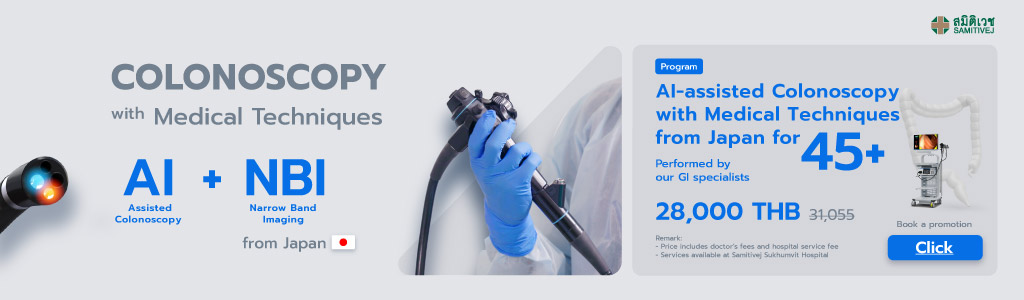
We monitor colonoscopy performance in alignment with ASGE (American Society for Gastrointestinal Endoscopy) quality indicators, using these benchmarks to guide continuous quality improvement and transparent outcome reporting. At present, Samitivej employs AI technology in colonoscopy alongside NBI (Narrow Band Imaging) techniques from Japan, which double the accuracy rate in diagnosis. This technological advancement has led to significant achievements in gastroenterology, notably in the early detection and prevention of colon cancer.
Colonoscopy Quality Indicators (ASGE Benchmarks for Reference)
- Medically indicated procedures only: 100% | ASGE 80%
- Adequate bowel preparation rate: 90% | ASGE 85%
- Complete examination (Cecal Intubation Rate): 100% | ASGE 95%
- Withdrawal time ≥ 6 minutes: 100% | ASGE 100%
- Complete medical documentation: 100% | ASGE 95%
Outcome Indicators
- Perforation rate: 0% | ASGE 0.1%
- Post-polypectomy bleeding: 0.1% | ASGE 1%
- Adenoma Detection Rate (ADR):*
- Age 50+: 45% | ASGE 35%
- All ages: 40% | ASGE 35%
Gastroenterologists (Gastrointestinal Endoscopy Specialists):
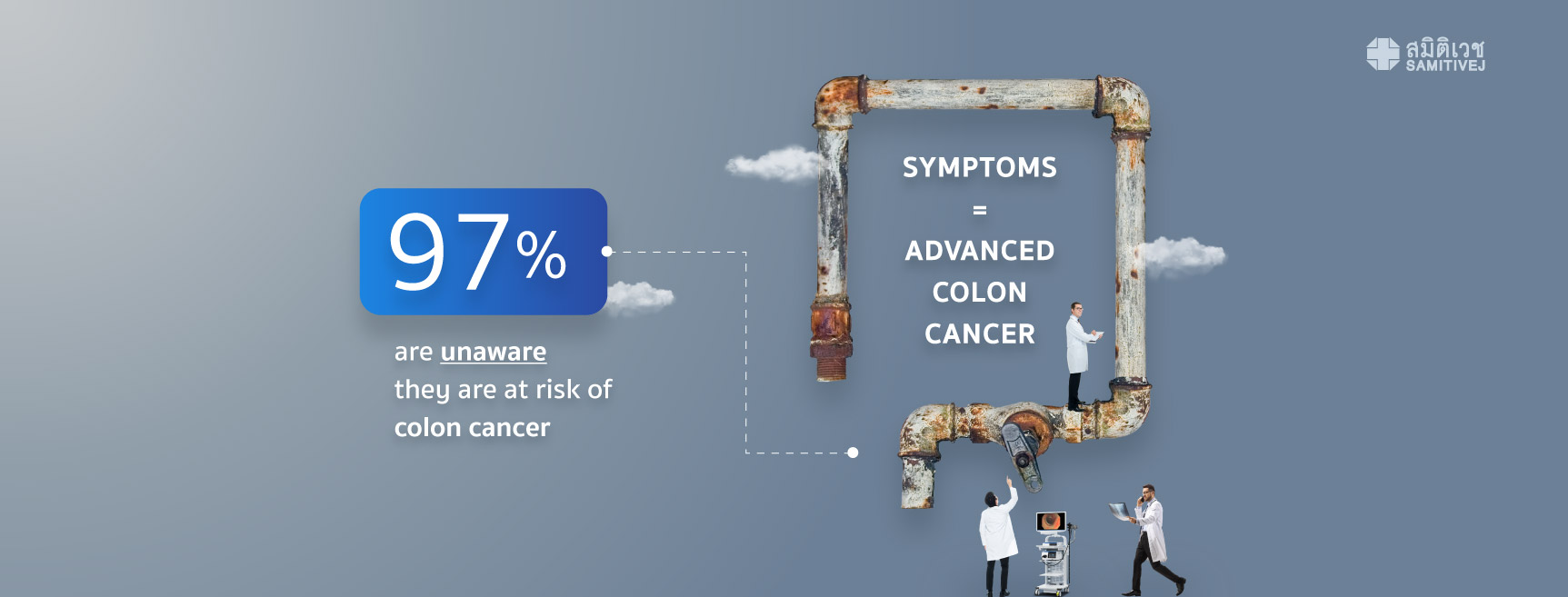
Symptoms = Advanced Colon Cancer
For general illnesses, patients usually see a doctor when they experience abnormal symptoms. When it comes to colorectal cancer, however, patients often do not notice any symptoms, or their symptoms may be similar to those of other gastrointestinal disorders. As such, patients often think there is nothing to worry about. Symptoms include changes in the digestive system, alternating diarrhea and constipation, unexplained weight loss, weakness or fatigue, paleness, blood in stools, and chronic stomach pain, especially in the lower abdomen, any of which could be symptoms of colorectal cancer in stages 2-4. American Society for Gastrointestinal Endoscopy (ASGE) urges people to start regular colon cancer screening at age 45.
Under Samitivej’s data showed that 97% of patients were unaware that they were at risk of colorectal cancer at the age of 45 and over, had never had a colonoscopy before, and thought that they should wait till they noticed symptoms before coming to see a doctor. As doctors, therefore, we want to spread awareness that any patients age 45 and over who meet the screening criteria should come to the hospital to undergo a colonoscopy. If a patient has any family history of colorectal cancer, a colonoscopy is even more urgent as this type of cancer can be hereditary.
Don’t wait until you have symptoms, because symptoms = Cancer has spread
Testimonial from colonoscopy patient
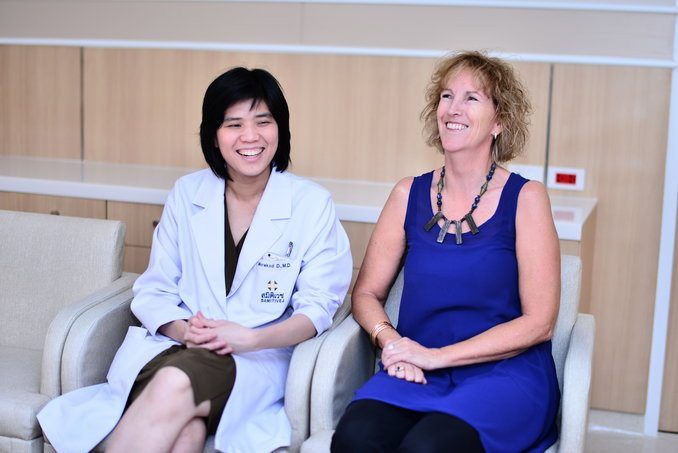 |
Doctor Discovers Hidden Polyps Persistent fatigue led Jean to seek a second opinion at Samitivej. A colonoscopy revealed hidden polyps that could have become cancerous. Early detection changed everything. Discover how timely screening protected her future. |
|
 |
When GI Symptoms Signal Something Serious At 80, mild bloating seemed harmless—until screening at Samitivej revealed hidden polyps requiring treatment. Early diagnosis prevented serious complications. Learn why ignoring symptoms can be risky. |
|
 |
Colonoscopy Saves Man from Cancer After experiencing stomach pain and turning 50, Michael chose a colonoscopy at Samitivej. Doctors found and removed a high-risk polyp before it became cancer. A simple screening became life-saving. See how early action made the difference. |
|
|
I’m interested in having a colonoscopy. What should I do?
Patients must first see a doctor and provide their personal medical history, such as information about any medical conditions, drug allergy history, regularly taken medications, etc. The doctor will then provide information on how to prepare for the colonoscopy and will answer any questions and concerns. Upon deciding to undergo a colonoscopy, one of our nurses will help make an appointment.
Email us at [email protected] to make an appointment regarding a colonoscopy consultation or find out more information about what is on offer, including insurance cover.
|
Related information: Why should I get a colonoscopy at the age of 45? | Stop colorectal cancer in your family with genetic testing for cancer | Colon cancer surgery with laparoscopic colectomy | Treating colon cancer with targeted therapy
Stop colorectal cancer in your family with genetic testing for cancer
While most colorectal cancers are due to abnormalities on an individual level, approximately 5-10% are hereditary. These cancer genes, however, may or may not exhibit as cancer; this is dependent upon the physical condition of each person.
Research studies have shown that those who have a family history with two or more first-degree relatives with colon cancer, breast cancer, ovarian cancer, lung cancer, rectal cancer, etc., or who have one first-degree relative who was diagnosed with colon cancer under 50 years of age, should undergo a colonoscopy to screen for any abnormalities that could develop into a malignant tumor or cancer. The recommended age to commence screening is calculated by subtracting 10 from the age of the affected family member at the time they were diagnosed with colon cancer. The resulting number represents the age at which the first screening should be carried out. For example, if a father was diagnosed with colon cancer aged 50, his offspring should undergo screening beginning at age 40 and should not wait until they experience symptoms, as those who fit within the above criteria are considered to be more at-risk than others.
|
The Role of Precision Medicine in Preventing and Diagnosing Colon Cancer in Thailand
As a leader in Precision Medicine in Thailand, Samitivej Hospital currently provides state-of-the-art genetic testing, using advanced technology that allows you to be proactive in your healthcare by screening for genetic abnormalities in the body. This screening method has detection accuracy rates of up to 90% and is used to test for a wide range of cancers. It is beneficial for:
- Cancer patients who wish to know of any abnormal genes that may pass increased cancer risk to their offspring. These test results can also be used to help create a specific, targeted treatment plan.
- Direct relatives of cancer patients who wish to know of any abnormal genes that they may have inherited from their parents in order to take preventive measures. The age range for direct relatives suitable for screening is as follows:
- First-degree relatives aged 12 years or older in a family with a history of FAP cancer
- First-degree relatives aged 20 years or older in a family with a history of HNPCC cancer
- Healthy persons aged 20 years and older who wish to know of any abnormal genes that they may have inherited from their parents in order to take preventative measures for the future.
To learn more about our colon cancer genetic screening programs, click here
|
Related information: Why should I get a colonoscopy at the age of 45? | Stop colorectal cancer in your family with genetic testing for cancer | Colon cancer surgery with laparoscopic colectomy | Treating colon cancer with targeted therapy
Colon cancer surgery with laparoscopic colectomy (minimally invasive surgery)
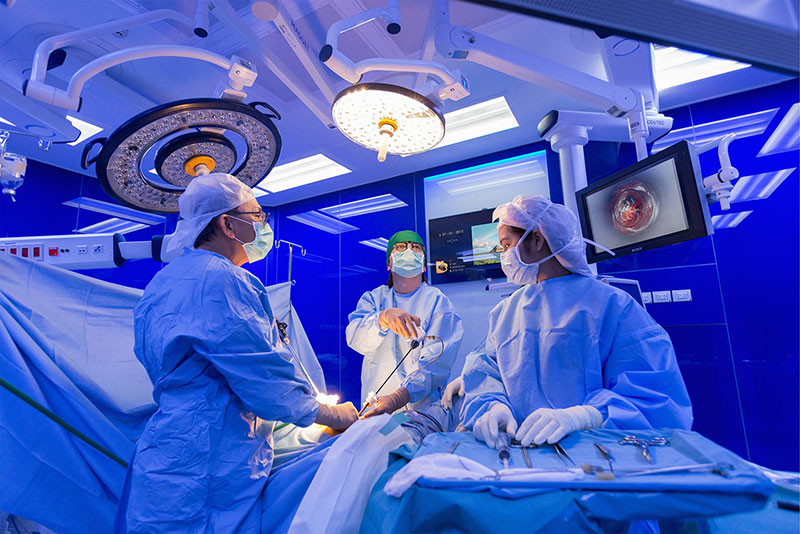 |
Minimally Invasive Surgery |
Until recently, colon cancer surgery was limited to colostomy in order to identify and remove the portion of cancerous colon. Such a procedure often caused anxiety in patients as they worried about not only the cancer treatment itself, but also about the price of the surgery as well as after effects and rehabilitation. Fortunately, laparoscopic colectomy techniques now available allow for less invasive surgeries, involving inserting a high powered microscope camera into the abdomen via a tiny abdominal incision. The tube on which the camera is mounted also carries a tool capable of removing the cancerous section of the colon, including any affected nearby lymph nodes and blood vessels. The side effects of such a procedure are minimal. Rehabilitation times are quick while costs are low when compared with colostomy, which takes longer to carry out and results in lengthy, expensive rehabilitation times.
Colorectal Surgeons (Colorectal Surgery Specialists)
- Chingyiam Panjapiyakul, M.D.
- Apichart Thanapatcharoen, M.D.
- Wannaporn Teerasopon, M.D.
- Frcst, Facs, Fasmbs. Pornthep Prathanvanich, M.D.
- Pakpong Wathanaoran, M.D.
What are the costs for colon cancer surgery with laparoscopic colectomy and can my insurance cover this? Click here
|
Related information: Why should I get a colonoscopy at the age of 45? | Stop colorectal cancer in your family with genetic testing for cancer | Colon cancer surgery with laparoscopic colectomy | Treating colon cancer with targeted therapy
Treating colon cancer with targeted therapy

Samitivej is delivering precision medicine to help in the fight against cancer by utilizing medication that specifically targets harmful cancer cells and leaves other cells undamaged. The response rates of such treatments are as high as 80%, compared to regular chemotherapy treatments which typically offer 30% response rates.

Medical Oncologists (Colorectal Cancer Specialists)
Why choose Samitivej Hospital in Bangkok, Thailand, for your colon cancer care?
Samitivej Hospital is a trusted, internationally recognized private hospital in Bangkok, Thailand, offering unparalleled expertise in colon cancer screening and treatment:
- World-class gastroenterologists: Our team of highly trained, internationally recognized gastroenterologists ensure you receive the best possible care.
- Partnership with leading Japanese hospital: Our collaboration with SANO Hospital, a leader in GI endoscopy, brings advanced Japanese techniques and expertise to Bangkok.
- AI-assisted technology: We utilize cutting-edge AI technology from Japan to enhance the accuracy of colon cancer screening.
- Comprehensive treatment options: We offer a full spectrum of colon cancer treatments, ensuring personalized care plans.
- Precision medicine leader: Experience state-of-the-art genetic testing to identify cancer risks and tailor your treatment accordingly.
Samitivej has a team ready to help and provide you with the following services:
-
Treatment Plan Consultation with a doctor via online video-call (second opinion)
- Treatment Planning if you have medical records or a price estimate from another hospital
- Cost Planning by our Appraisals Team with price guarantee (only for procedure packages without complications)
- Check Initial Coverage Eligibility with Thai and international insurance companies (only for insurance companies in contract with the Hospital)
|
Related information: Why should I get a colonoscopy at the age of 45? | Stop colorectal cancer in your family with genetic testing for cancer | Colon cancer surgery with laparoscopic colectomy | Treating colon cancer with targeted therapy
Share article


Related
package
Related
articles