


Unlock the Joy of Movement: Experience Exceptional Value with Knee Replacement Surgery in Thailand!
With modern medical techniques, knee replacement surgeries now have a much higher chance of success and take less time to complete than in the past. This means that a solution is available for those with chronic knee pain or for patients who have sustained serious knee damage. These patients will generally have tried lengthy courses of medication or other types of treatment for their knee pain without success.
Knee replacement surgery is a procedure involving the removal of damaged cartilage and the knee joint, replacing them with an artificial joint made from metal alloys and fixed into place with a special form of cement. The replacement joint also has a polyethylene coating capable of taking the weight placed through the joint, which means patients can make a return to their daily lives within just a few days after undergoing surgery.
Signs and Symptoms That Require Medical Attention
1. Knee pain
The pain is especially severe when walking up and down stairs, although serious knee pain can also occur when sitting or lying down. Patients may experience shooting pain walking up and down stairs, while putting on socks or shoes, standing up from a seated position or during sleep. This pain may also result in walking abnormalities.
2. Arthritis involving redness and inflammation
Constant and chronic knee pain over an extended period can lead to inflammation and other complications, involving redness and inflammation of the knee joint. If you experience these symptoms, you should seek medical consultation to determine the best course of treatment.
3. Deformities affecting the knee
Knee deformities can affect walking and balance, which can result in back pain that spreads to the hips. Knee deformities can cause patients to walk with a limp and can lead to spinal disorders. People suffering from such issues may be required to undergo knee replacement surgery to accurately address the issue.
4. Being unable to fully extend the knee
This can lead to walking bow-legged, as well as placing the muscle surrounding the knee at risk of atrophy, or may cause severe pain when getting up from a sitting position.

Diagnosing Knee Osteoarthritis
- The first step is a basic health examination including a look at the patient’s medical history, especially regarding any pain, abnormalities, walking capabilities, and general usage of the joint.
- An X-ray may be necessary to accurately assess knee damage.
- MRI scans will be utilized to check the cartilage, tendon, and musculoskeletal situation of the knee.
Treatment in the Form of Knee Replacement Surgery
Knee replacement surgery can be carried out at various stages of life depending on the patient’s symptoms and the severity of their condition. There are two main types of knee replacement surgery:
1. Total Knee Replacement
Total knee replacement surgery, also called total knee arthroplasty (TKA) involves removing the damage compartment of the knee both at the femur and the tibia, including both the medial and lateral compartments, before replacing them with an artificial joint (prosthesis) made of metal alloys and polyethylene. This procedure offers a range of benefits, although it is generally only used in cases where severe damage has been sustained to the cartilage and tendons of the joint. Patients tend to be over age 60, often suffering from leg deformities, because this procedure offers a single solution for all of these issues.
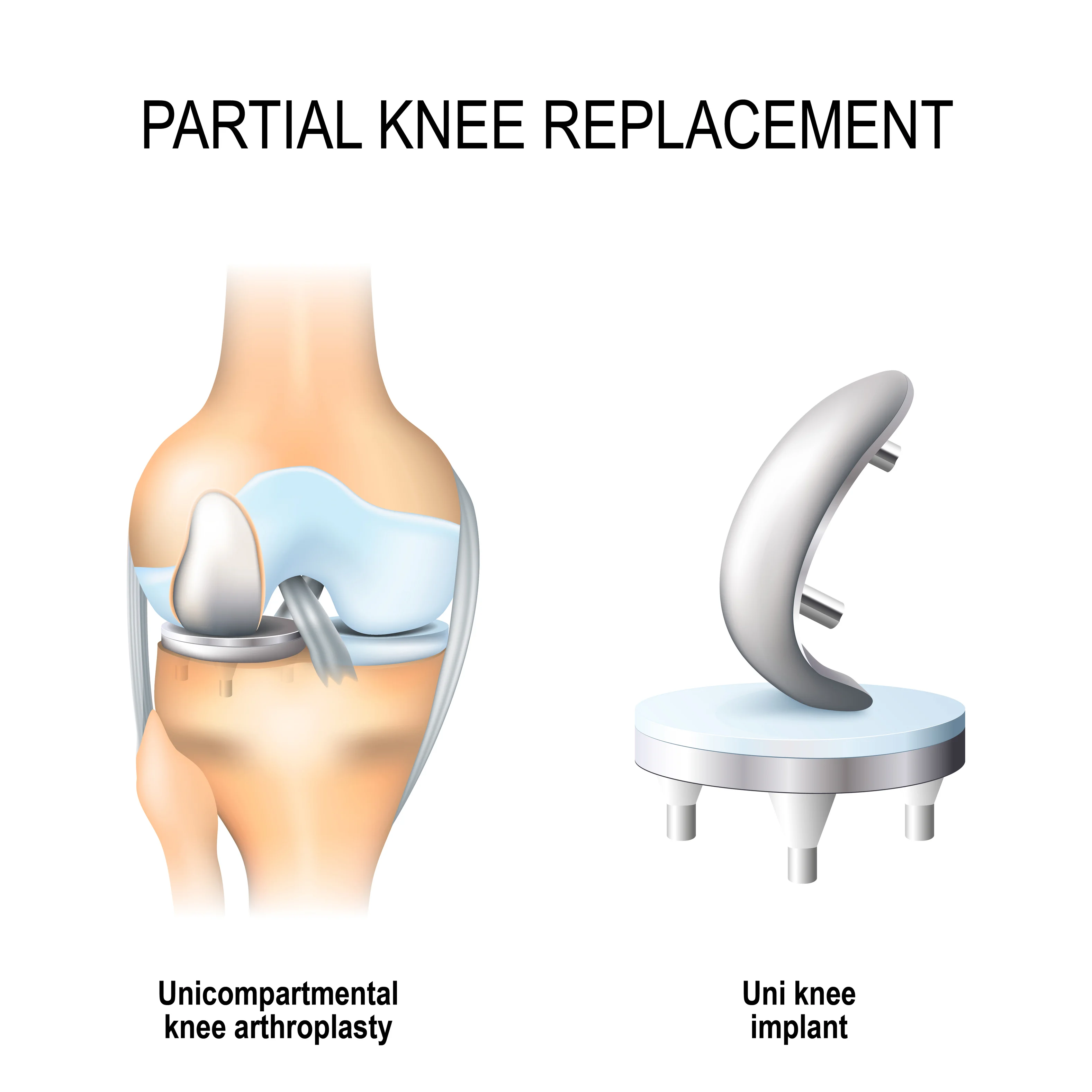
2. Unicompartmental Knee Replacement
Unicompartmental knee arthroplasty, or UKA for short, is a procedure aimed at removing damaged or injured cartilage from the end of a bone (either in the medial or lateral compartment) before recovering it with an alloy material and polyethylene to act as support between the alloy (Figure 1). The procedure leaves healthy parts of the joint untouched, including the surrounding tendons. The minimally invasive surgery, which requires incisions of just 3–3.5 inches in length, minimizes damage to surrounding ligaments or tissue. The fact that over 90% of age-related osteoarthritis cases involve cartilage damage affecting just one side makes unicompartmental knee arthroplasty preferable to total knee arthroplasty. This makes it possible for patients to rely on their knee almost as much as they would have before the damage was caused, with most cases able to place weight through the joint within just 1 or 2 days after surgery.
Testimonial
Our doctors


Get Professional Help Today
Send an inquiry or schedule an appointment
*Required
Share article

