Colon cancer: Why Screening Should Begin at Age 45

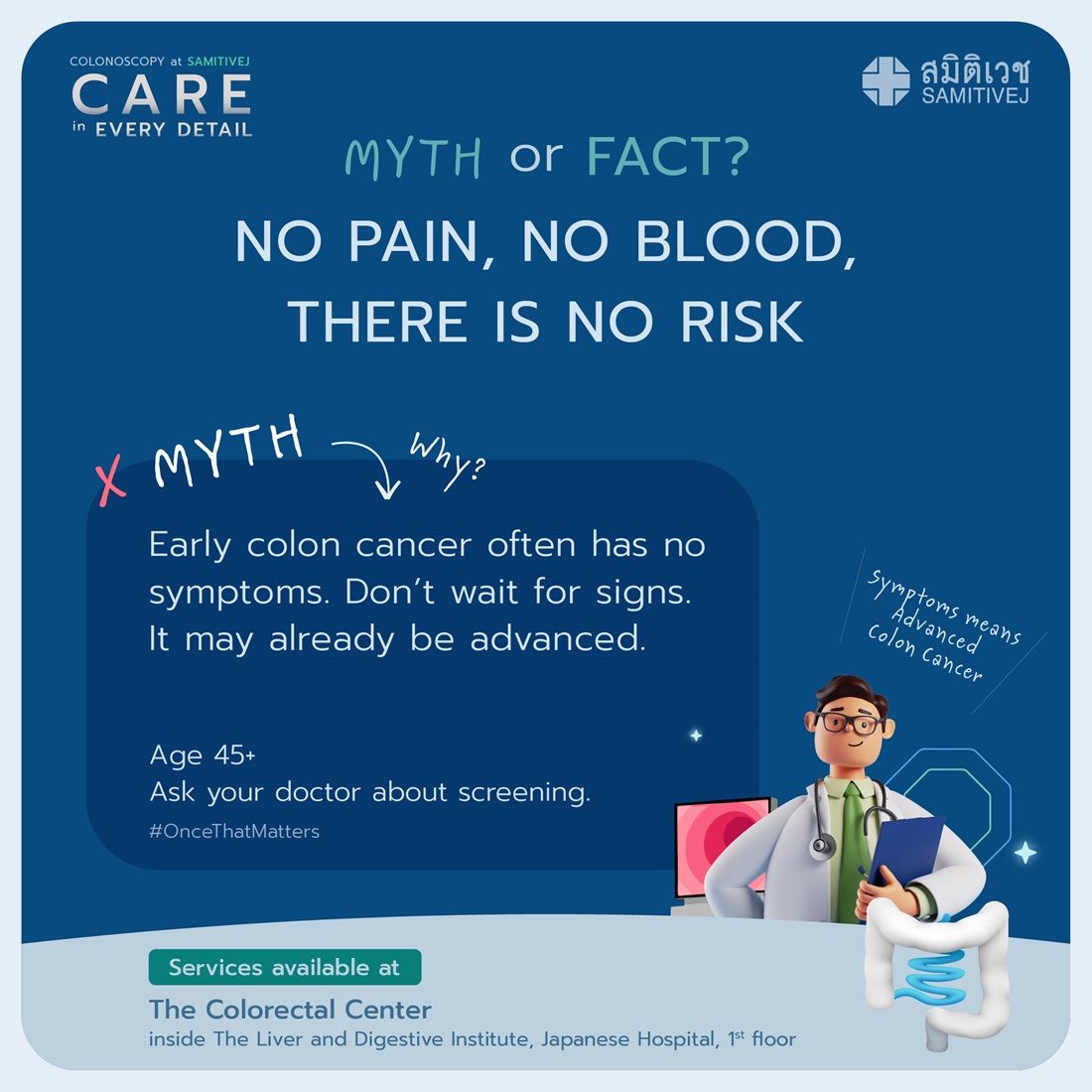
Many people assume that if they have no abdominal pain or blood in their stool, they are not at risk for colon cancer. In reality, the disease can develop gradually inside the colon for years before symptoms appear—typically only once it has progressed—which can make treatment more complex.

Who Should Undergo a Colonoscopy?

✅    Everyone aged 45 and above, even without any abnormal symptoms
✅    Those with a first-degree relative who has had colon cancer — screening may be recommended before age 45
✅    Individuals at higher risk, such as those with a history of polyps or certain gastrointestinal conditions—may also need to start before age 45

A colonoscopy can detect abnormalities or "polyps" before they develop into cancer—and they can be removed during the same procedure. When detected early, the chances of a complete cure increase significantly and the mortality rate from the disease is greatly reduced.

If you have no symptoms today, this may be the best time to begin a conversation with a gastroenterologist.
Samitivej Sukhumvit has extensive experience performing colonoscopies, meeting standards set by the American Society for Gastrointestinal Endoscopy (ASGE), and has contributed to the prevention of colon cancer in 27,687 cases.

LEARN MORE ABOUT THE COLONOSCOPY PACKAGE



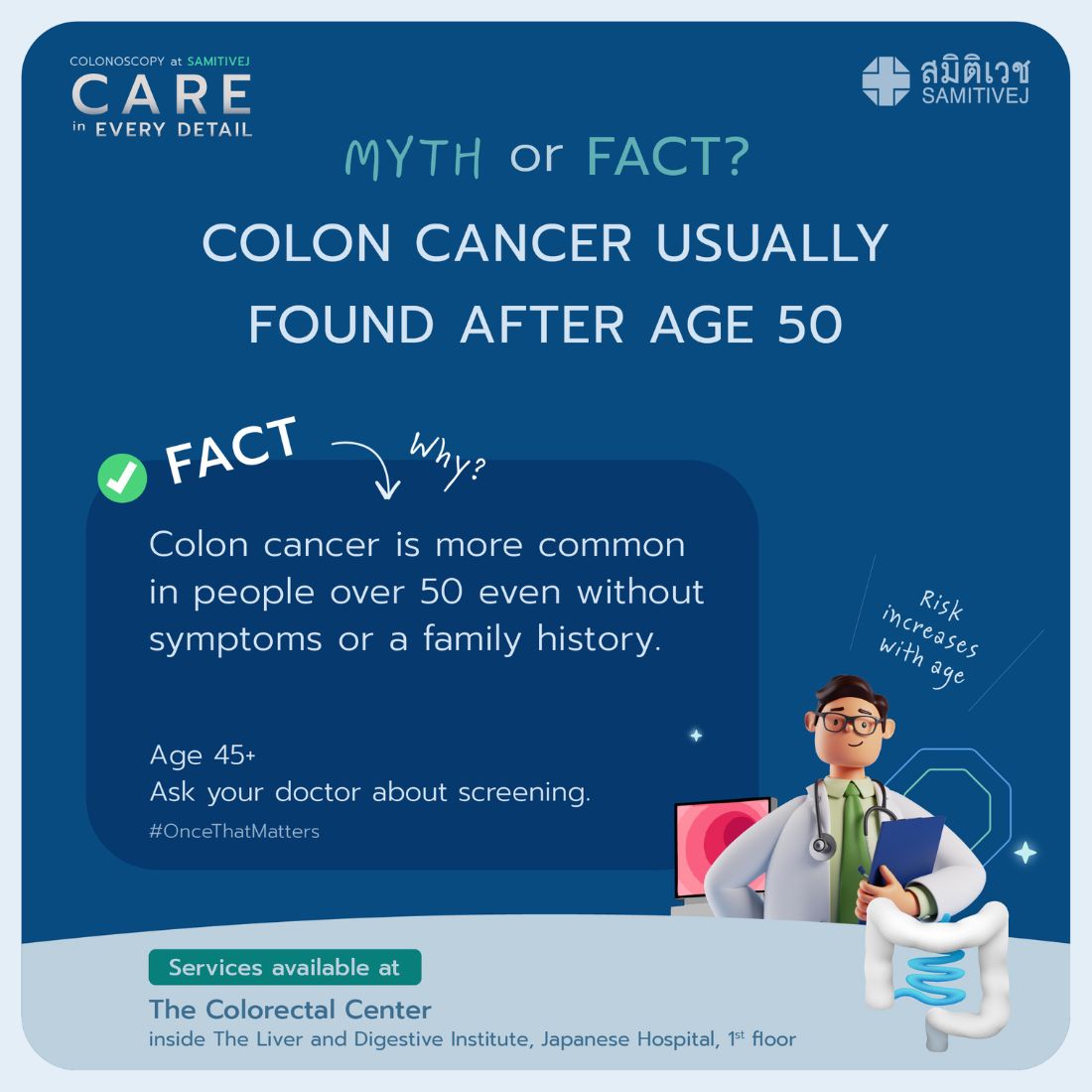
Colon cancer is more commonly found in people over age 50, and the risk increases significantly with age.

This is precisely why you should not wait until age 50 to start thinking about screening.

AGE is one of the key risk factors—even without symptoms, and even without a family history, the disease can still occur. For this reason, the U.S. Multi-Society Task Force on Colorectal Cancer recommends that average-risk individuals begin colorectal cancer screening starting at age 45 (Patel, Swati G., et al. "Updates on Age to Start and Stop Colorectal Cancer Screening: Recommendations From the U.S. Multi-Society Task Force on Colorectal Cancer." Gastroenterology, vol. 162, no. 1, Jan. 2022, pp. 285–299.).

This recommendation was developed based on a review of epidemiological data and trends showing colon cancer appearing in younger age groups in recent years. It has since been widely adopted as a clinical guideline.

A colonoscopy is not just a diagnostic test—it also allows doctors to detect polyps that could develop into cancer and remove them during the same procedure, significantly reducing future cancer risk.
If you are 45 or older, this may be a good time to speak with your doctor about screening.

Samitivej Sukhumvit has extensive experience performing colonoscopies, meeting standards set by the American Society for Gastrointestinal Endoscopy (ASGE), and has contributed to the prevention of colon cancer in 27,687 cases.

LEARN MORE ABOUT THE COLONOSCOPY PACKAGE


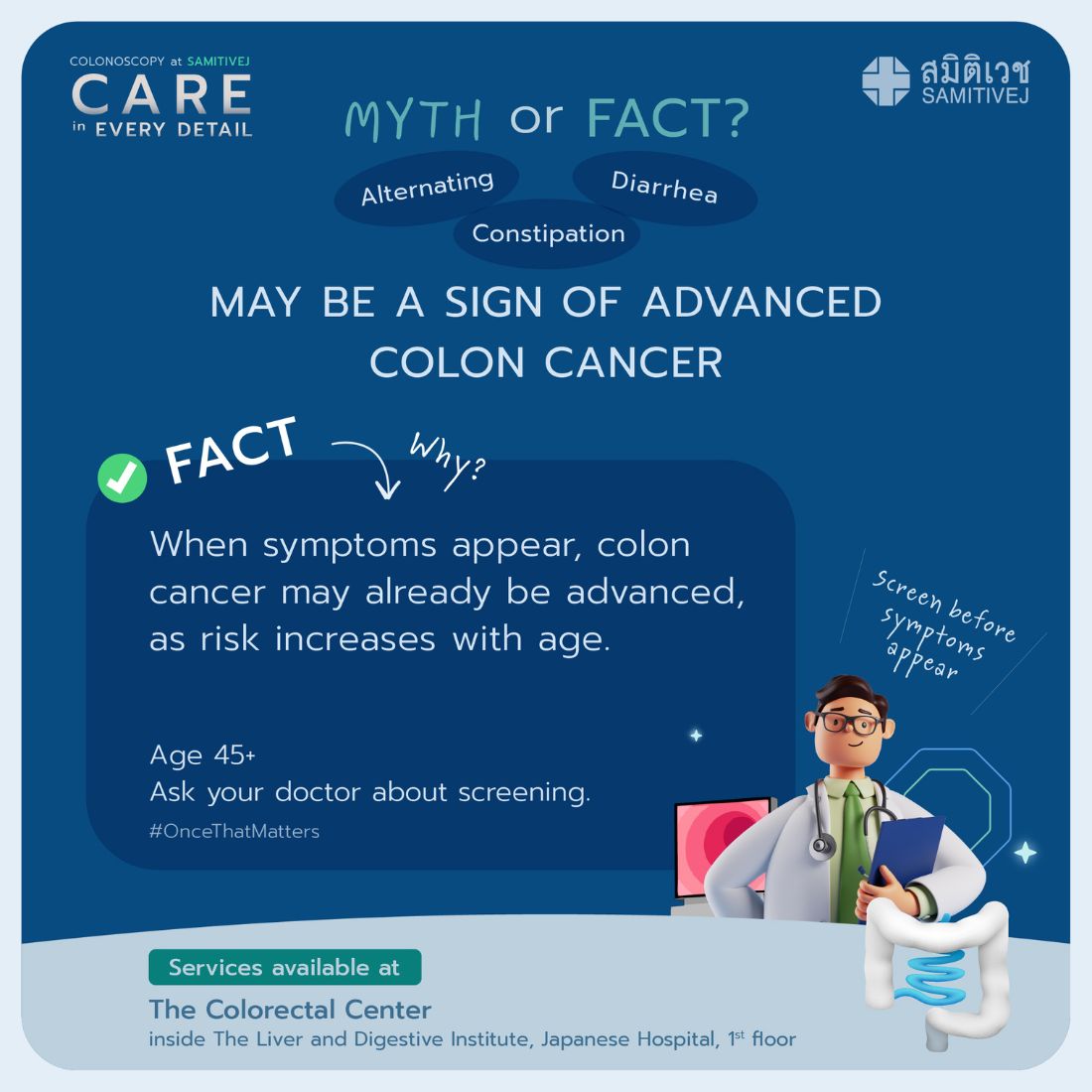
Alternating constipation and diarrhea, blood in the stool, chronic abdominal pain, or a feeling of incomplete bowel emptying may be signs of abnormalities in the large intestine. However, colon cancer symptoms often appear only after the disease has significantly progressed.

Unlike many conditions that cause early symptoms, colon cancer in its initial stages often presents no obvious signs. By the time symptoms appear, such as changes in bowel habits, unexplained weight loss, or unusual fatigue, the disease may already be at an advanced stage, making treatment more complex.

Since cancer risk increases with age, it is important not to wait for symptoms before seeking medical evaluation. Screening guidelines recommend consulting a doctor starting at age 45 to detect polyps that could develop into cancer—and remove them before symptoms ever appear.

If you are 45 or older, screening is a better approach to intestinal health than waiting for symptoms to develop.
Samitivej Sukhumvit has extensive experience performing colonoscopies, meeting standards set by the American Society for Gastrointestinal Endoscopy (ASGE), and has contributed to the prevention of colon cancer in 27,687 cases.

LEARN MORE ABOUT THE COLONOSCOPY PACKAGE


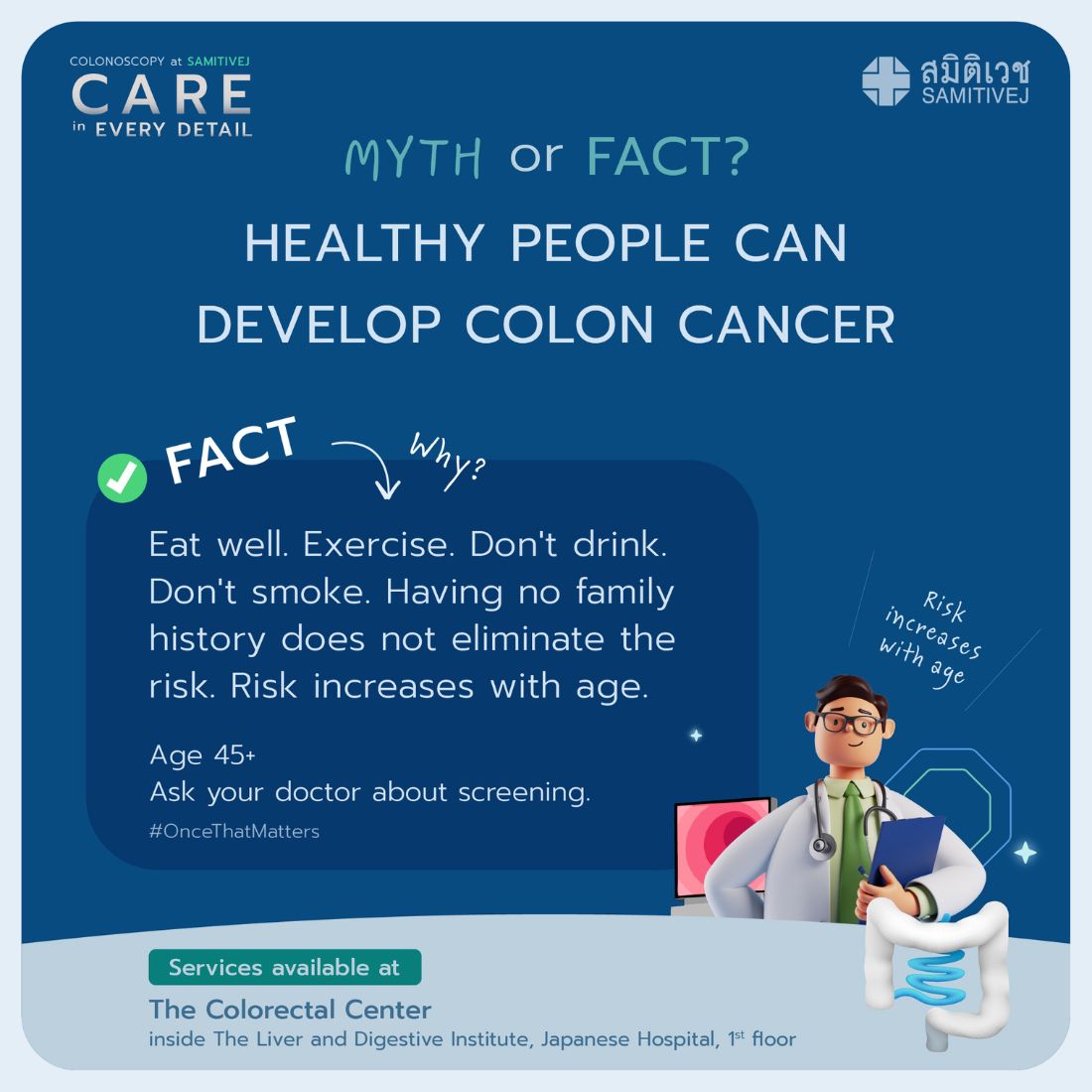
Many people consider themselves low-risk— eating a healthy, clean diet, exercising regularly, not smoking, not drinking alcohol, and having no family history of colon cancer—so they assume they are not at risk.

One of the most significant risk factors for colon cancer is AGE and the risk increases significantly with each decade of life. Even without symptoms and without a family history, the disease can still occur.

For this reason, screening guidelines from gastroenterology experts, published by the American Society for Gastrointestinal Endoscopy (ASGE) and the U.S. Multi-Society Task Force on Colorectal cancer, recommend that average-risk individuals begin screening from age 45 onward—to identify and remove polyps before symptoms develop (Source: ASGE, 2022).

Who Should Undergo a Colonoscopy?

✅    Everyone aged 45 and above, even without abnormal symptoms
✅    Those with a first-degree relative with colon cancer (may not need to wait until age 45)
✅    Those with a history of polyps or certain gastrointestinal conditions (consult a doctor before age 45)

Screening is therefore not limited to those with symptoms—it is a healthcare approach based on age and individual risk level.
If you are 45 or older, screening is a better approach to intestinal health than waiting for symptoms.

Samitivej Sukhumvit has extensive experience performing colonoscopies, meeting standards set by the American Society for Gastrointestinal Endoscopy (ASGE), and has contributed to the prevention of colon cancer in 27,687 cases.

LEARN MORE ABOUT THE COLONOSCOPY PACKAGE

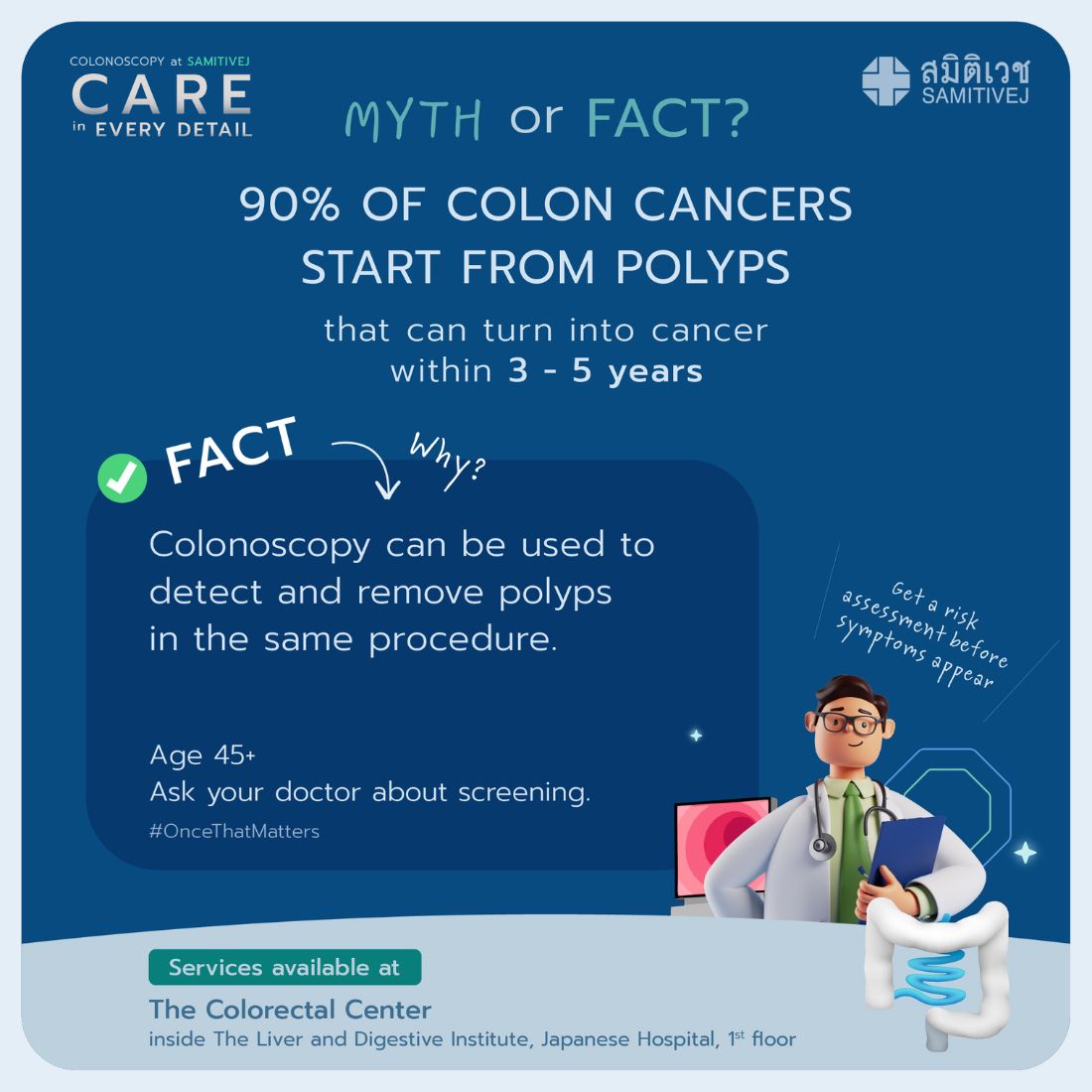
Approximately 90% of colon cancers begin as small "polyps," which may take 3–5 years to develop into cancer.

Early-stage polyps often show no symptoms and are not yet cancerous. If left undetected, they may eventually become malignant (cancerous). The critical point, however, is that polyps found early can be removed immediately during a colonoscopy to reduce future risk.

Colon cancer is more often found in people over 50, which is why screening guidelines recommend assessment starting at age 45—to find and manage risk before polyps have a chance to grow.

If you are 45 or older, screening is a better approach to intestinal health than waiting for symptoms.

Samitivej Sukhumvit has extensive experience performing colonoscopies, meeting standards set by the American Society for Gastrointestinal Endoscopy (ASGE), and has contributed to the prevention of colon cancer in 27,687 cases.

LEARN MORE ABOUT THE COLONOSCOPY PACKAGE

Many people undergo annual health check-ups, and when results come back normal they often feel reassured that they have no health risks.

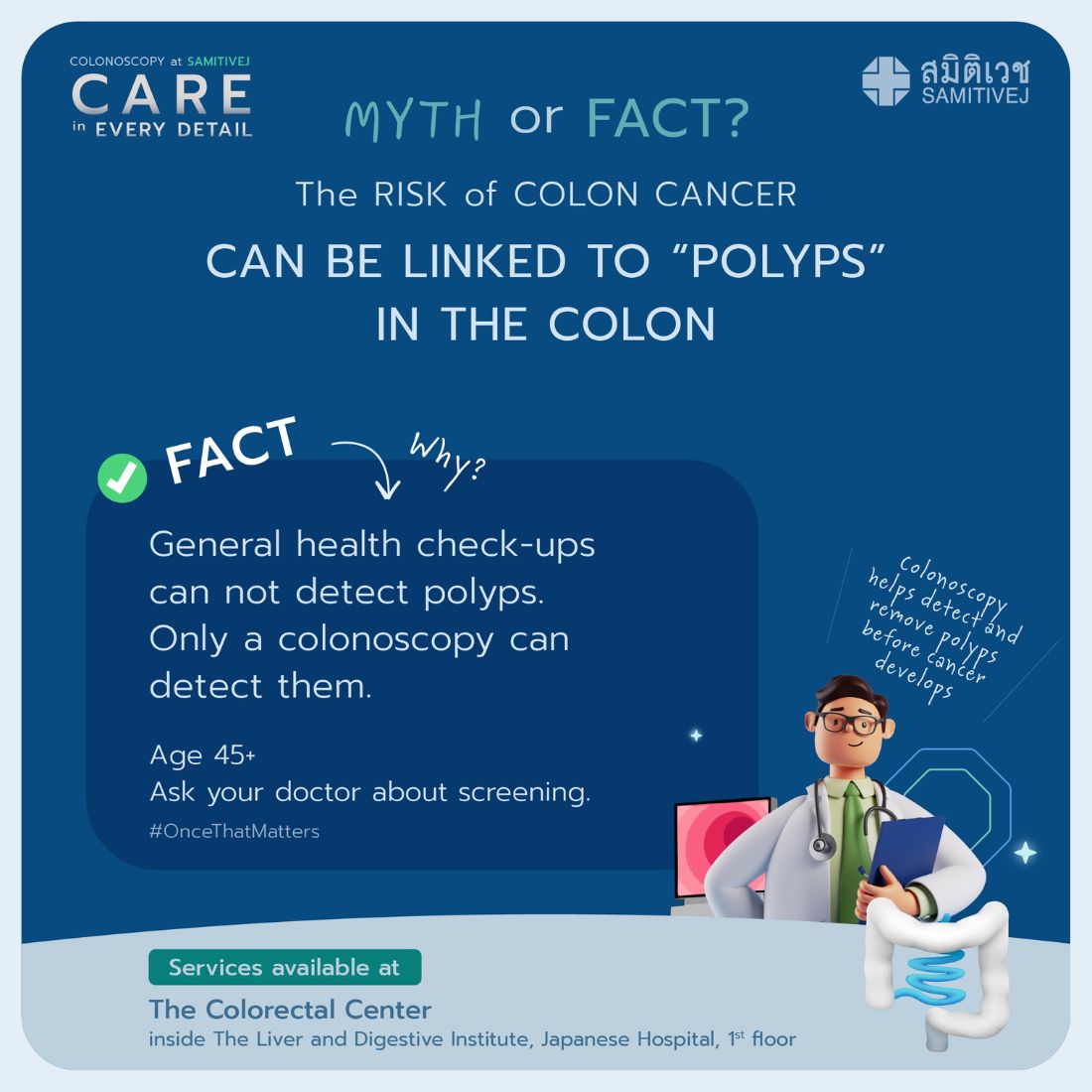
However, a standard health check-up cannot directly visualize polyps inside the colon.

Small polyps in the large intestine often show no symptoms and cannot be detected through routine blood tests or standard X-rays. Therefore, colon cancer risk cannot be assessed from annual check-up results alone—the interior of the colon must be examined directly.

A colonoscopy allows doctors to clearly see abnormalities or polyps, and remove them immediately during the examination—before they have the chance to develop into cancer.
For individuals aged 45 and above, even if routine health check-up results appear normal, discussing additional colorectal screening with your doctor is an important step toward comprehensive bowel health care.

If you are 45 or older—whether you have already had a check-up this year or are planning one—don't forget to ask your doctor about a colonoscopy as well.

Samitivej Sukhumvit has extensive experience performing colonoscopies, meeting standards set by the American Society for Gastrointestinal Endoscopy (ASGE), and has contributed to the prevention of colon cancer in 27,687 cases.

LEARN MORE ABOUT THE COLONOSCOPY PACKAGE

A colonoscopy, combined with polyp removal, significantly reduces the risk of colon cancer and is an important step in maintaining your bowel health.

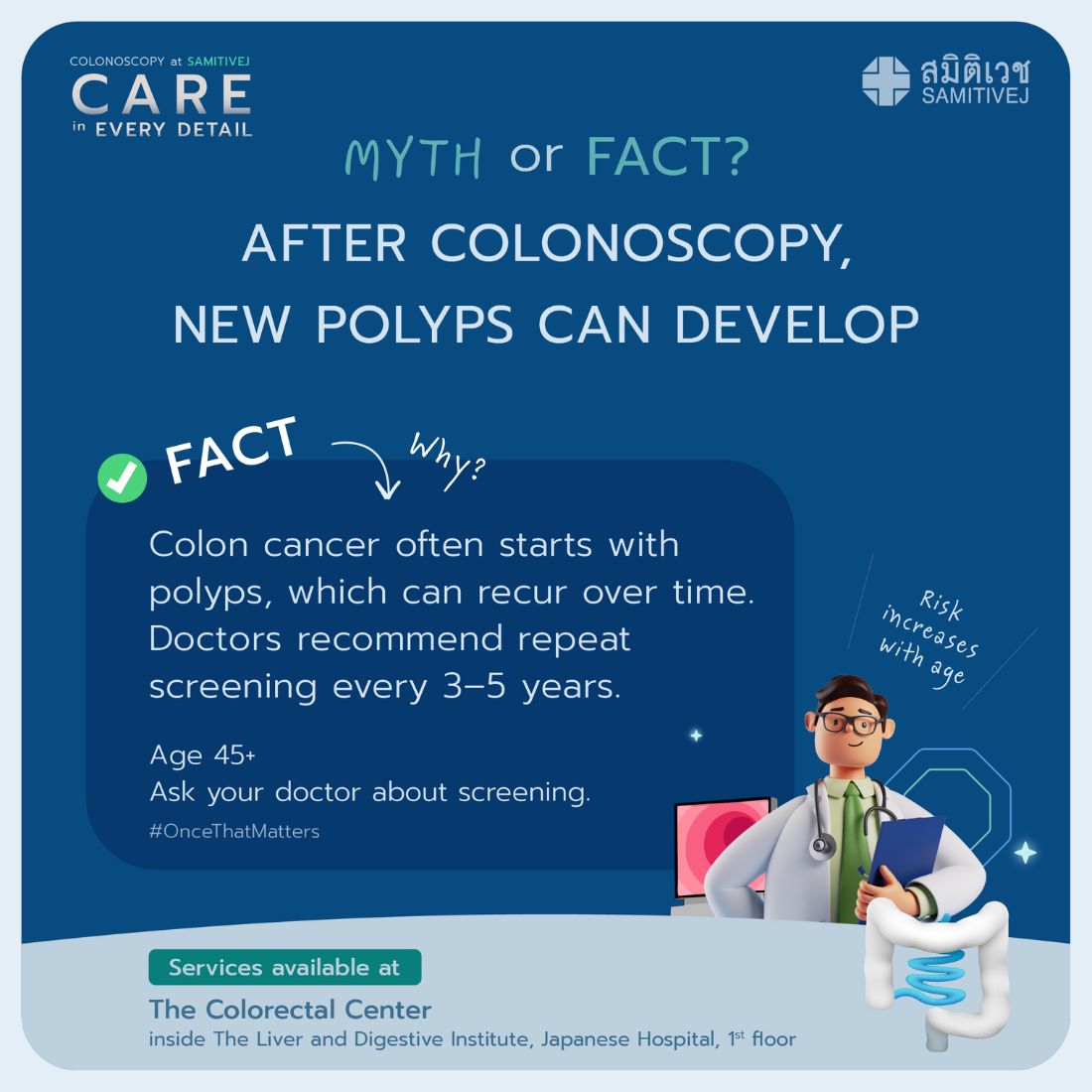
However, new polyps can develop in other areas of the colon, even after previous ones have been removed. For this reason, doctors typically recommend follow-up colonoscopies every 3–5 years, depending on the size, number, and characteristics of the polyps previously found.

Follow-up examinations do not mean the previous procedure "didn't work"—they are a form of ongoing care to keep your risk level consistently low.

If you cannot remember when your next colonoscopy is due, please contact the Colorectal Center. Our nursing team can assist in reviewing your records and guiding you through the next steps.

LEARN MORE ABOUT THE COLONOSCOPY PACKAGE

Rating