

Interpreting Colon Cancer Risk Scores
2-3 Points (Moderate Risk, Increases with Age)
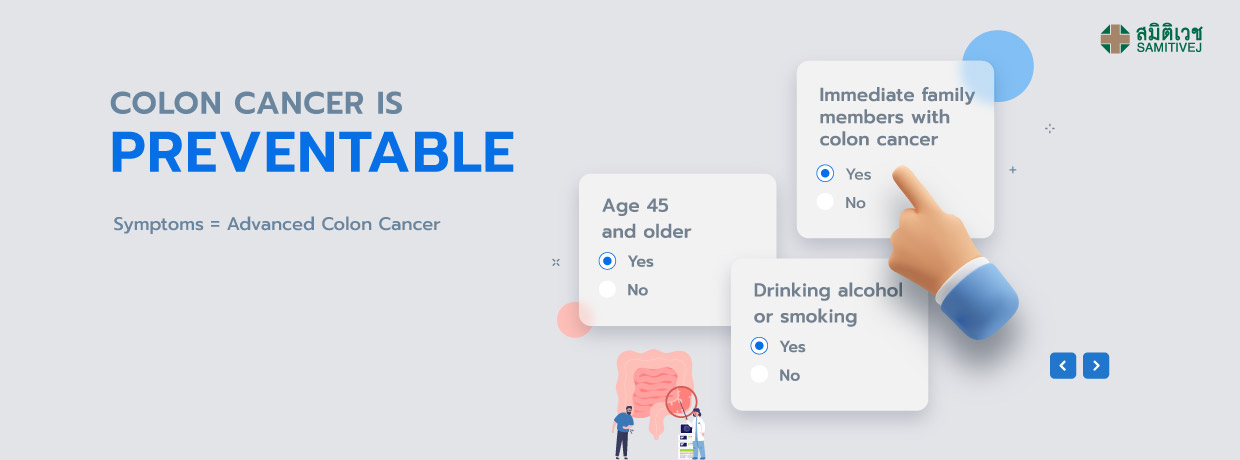
You possess at least one high-risk factor for colon cancer, such as being age 45 or older or having a family history of colon cancer. Although colon cancer is hereditary in only 5-10% of cases, if the APC cancer gene is detected the chances of developing colon cancer increase to 99%. Additionally, your risk increases with age. Surveys show that the risk factors for colon cancer are directly related to age, as follows:
- Younger individuals (those under age 40) have less than a 10% chance of developing colon cancer
- For those in middle age (40-50 years old) the chances increase to 20-30%
- However, for individuals aged 50 and above, the chances increase to as high as 30-40%
Colon cancer typically originates from the formation of polyps in the large intestine. In the early stages of polyp formation there are no noticeable symptoms. However, polyps that are left to grow larger can develop into cancer, a process which usually takes about 5 years. If left unchecked until the polyps grow to a significant size, symptoms such as bloody stools, which are the most common symptom of colon cancer, may start to appear. Early detection and removal of polyps is essential for effectively preventing colon cancer.
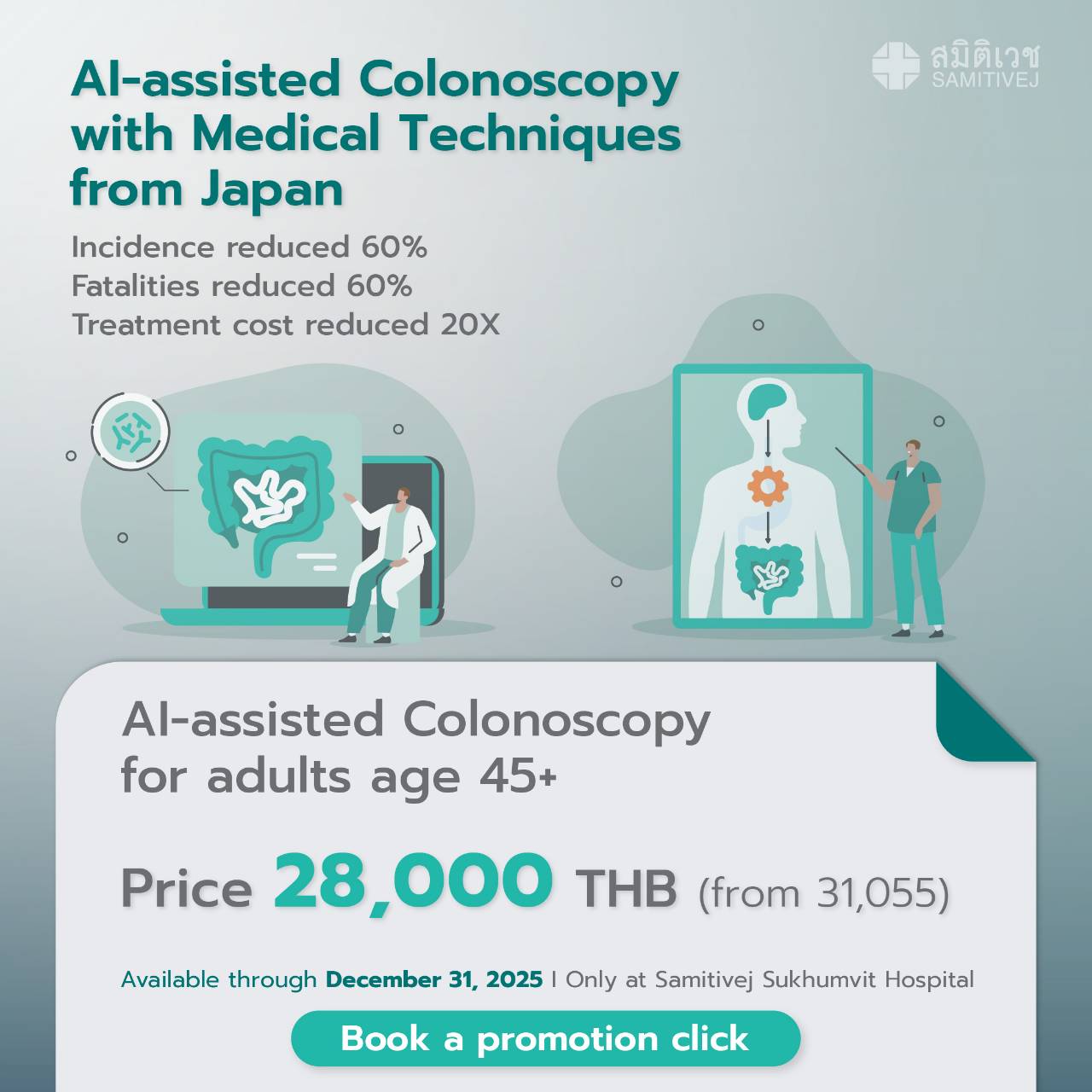
Japan, ranked among the top 10 countries globally for colon cancer cases, has been a catalyst for medical innovation. Sano Hospital in Japan has pioneered the use of Narrow Band Imaging (NBI) medical technology in colonoscopy, earning worldwide recognition as a leading authority in colonoscopy. Samitivej doctors have been trained in this technology, safeguarding 13,595 patients from colon cancer since 2015.
Furthermore, Samitivej Hospital has enhanced this technique’s accuracy by integrating the AI EndoBRAIN-EYE endoscopic system to aid in the detection of tiny polyps, or those hidden in hard-to-see locations, thus increasing the reliability of detecting and removing polyps to prevent colon cancer.
To date, Samitivej Hospital has successfully prevented colon cancer in 13,595 patients through the use of Japanese medical techniques, combining NBI with AI-assisted colonoscopy.
Inquiries/Appointments


Share article

